On September 22, 2026 (local time), the event “Medicine Across Oceans – A Century of Shared Learning and Partnerships: A Tribute to U.S.-China Collaborations in Medicine and Health” was held at the headquarters of the U.S. National Academy of Sciences in Washington, D.C. Held as the overseas session of the academic week marking the 105th anniversary of Peking Union Medical College Hospital (PUMCH), the event was co-hosted by Peking Union Medical College Hospital, the U.S. National Academy of Medicine, and the China Medical Board.
During the visit to the United States from September 20 to 25, the delegation, led by PUMCH President Zhang Shuyang, also convened a symposium on rare diseases and visited Georgetown University Medical Center and Johns Hopkins University School of Medicine and its hospital. Starting today, we are publishing a series of reflections from members of the delegation, recording what they saw and what they thought. A century of mutual learning leaves a lasting resonance; a new chapter is now beginning —
Author: Tian Zhuang, Director, International Medical Services (Dongdan Campus)
In September 2026, I took part in the event “Medicine Across Oceans – A Century of Shared Learning and Partnerships: A Tribute to U.S.-China Collaborations in Medicine and Health” and, together with Director Chen Limeng, presented the state of rare disease diagnosis, treatment, and research in China at the rare disease symposium. The symposium brought together PUMCH’s multidisciplinary rare disease team and rare disease experts from three top hospitals across the United States. After listening to every presentation, my deepest feeling was this: rare diseases may be called “rare,” but behind every patient stands an entire family’s world.
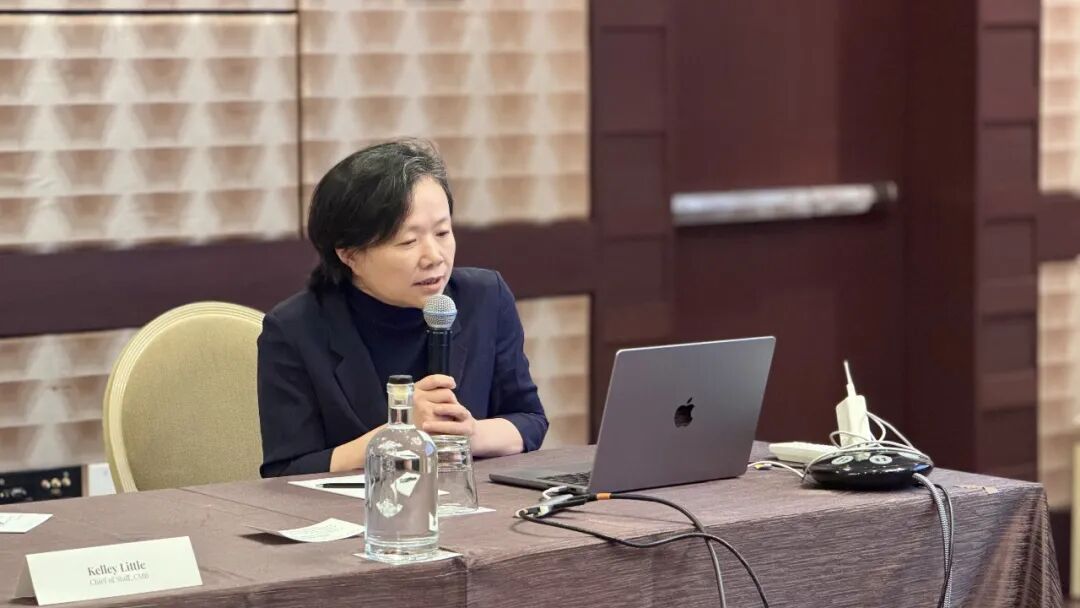
▲ Tian Zhuang delivering a report
Early Diagnosis and Early Treatment: Giving the Power of Choice Back to Families
Professor Wendy K. Chung of Boston Children’s Hospital shared her team’s work. In a cohort study of 400,000 people conducted in the United States, they identified some 250 monogenic subtypes of autism; they also built the global Simons Searchlight cohort, connecting families of patients who carry the same rare genetic variants with researchers. The team achieved success using antisense oligonucleotide therapy for KIF1A-associated neurological disorders, and pointed out that the pharmaceutical industry has abandoned the development of treatments for many ultra-rare diseases because of their low commercial value; to address this, Boston has established a therapeutic genetics center to support cross-institutional development of rare disease treatments.
This work reminded me that the cruelest thing about rare diseases is not only the absence of a cure — it is a diagnosis that comes too late. The significance of newborn screening is to give the power of choice back to families before symptoms appear. One day earlier of knowing means one more measure of possibility.
From Four Years to Four Weeks: Making Rare Diseases Seen
At the symposium, Director Chen Limeng presented PUMCH’s work in rare disease diagnosis and treatment. PUMCH has conducted rare disease research for over a century and was the first in China to diagnose a number of rare diseases. The hospital hosts a National Medical Center, a translational medicine platform, and a rare disease research institute; the NRDRS database has enrolled 100,000 cases with ten years of follow-up completed, and stores three million rare disease samples; the hospital quality monitoring system has collected data on three million cases covering 5,000 hospitals over the past five years. The self-developed rare disease large language model “PUMCH·GENESIS” achieves a diagnostic accuracy of 80%. The hospital established China’s first rare disease specialty and multidisciplinary consultation mechanism, spanning more than 20 specialties and bringing together online experts from over 100 hospitals to provide cross-institutional consultation services. It has released more than 100 clinical guidelines and consensuses, with some research findings incorporated into international guidelines on rare disease diagnosis and treatment. Over the past five years, free gene sequencing has been provided to 100,000 patients, advancing the application of gene therapy and CAR-T cell therapy in the treatment of rare diseases.
I gave a focused introduction to the UPWARDS project (a national initiative for upgrading rare disease diagnosis and treatment capacity). Launched by China in 2020, it is a national-level public welfare project with a total investment of RMB 320 million, aiming to shorten the diagnostic journey for rare disease patients, reduce the burden on families, and promote equitable access to gene sequencing. The project has three core components: providing genetic testing for patients with hereditary rare diseases and their families; incentivizing and promoting multidisciplinary consultations for rare diseases in hospitals nationwide; and carrying out training to improve physicians’ capacity in rare disease diagnosis and treatment.
The first phase of the project involved 545 participating hospitals, 825 training sessions, and 6,548 MDT consultations, covering 76,718 families; 170,935 free genetic tests were completed, with a positive rate of 29.8%, and 29,099 patients received a definitive diagnosis. Each family could save between 450 and 3,000 US dollars in testing costs; the time to diagnosis was shortened from an average of four years to four weeks, reducing related expenses by 90%. The second phase, to be implemented from 2026 to 2030, rests on three pillars — precision testing, coordinated consultation, and capacity building — upgrading genetic testing to multi-tiered sequencing schemes, establishing new clinical pathways for complex cases, advancing the implementation of MDT care through multi-center collaboration, and delivering hands-on clinical training.
From four years to four weeks is not merely a change in numbers. It means a family spends four fewer years on detours, four fewer years of money spent in vain, four fewer years of anguish. This is the simplest — and the weightiest — meaning of UPWARDS.
Cooperation That Crosses Barriers Is the Hope of Rare Disease Patients
Professor Peng Jin, Chair of the Department of Human Genetics at Emory University, introduced the department’s development history, core research strengths, clinical service layout, talent training system, and future strategic plans. The department boasts strong clinical and translational research platforms for rare and genetic diseases, with key laboratories dedicated to brain organoids, fragile X syndrome, and lysosomal diseases; it treats large numbers of rare disease patients each year while conducting newborn genetic screening and multiple gene therapy clinical trials. It has a well-established training system for residents, postdoctoral fellows, and genetic counselors, and has newly launched a graduate program in quantitative and AI genomics.
Professor Pedro A. Sanchez-Lara of Children’s Hospital of Philadelphia shared frontier insights on rare disease treatment development, research collaboration, and patient empowerment from the dual perspective of a clinician and a patient’s family member. His son’s diagnosis of hemophilia prompted a career shift, leading him to Johns Hopkins University to pursue research in individualized gene editing. He introduced the Spanish-language rare disease academic conference he founded, which has attracted more than 700 families, and proposed incorporating real-time multilingual translation support to broaden global participation. A physician who changed the direction of his career because of his own child’s illness, and who, because of that experience, helped more families be seen — this power, moving from personal pain to public action, is precisely the most moving part of the rare disease field.
Looking ahead, we recommend building public research and development platforms on the basis of national medical centers, to make up for the market’s shortcomings in drug development for ultra-rare diseases; strengthening the training of professionals such as genetic counselors; launching pilot programs in newborn genetic screening; advancing domestic and international data sharing under the premise of privacy protection; and iterating and promoting AI-assisted diagnostic tools, while exploring how the research paradigms of rare diseases can be applied to the study of common diseases — so as to comprehensively raise the level of rare disease diagnosis and treatment in China.
From diagnosis to treatment, from resources to new mechanisms, we still have much to learn and much room to grow — but cooperation can cross barriers. Through this exchange, we have also built bridges for future cooperation, and we hope to join hands with rare disease experts abroad to push forward, with all our strength, the early screening, early diagnosis, and treatment of rare diseases. Let rare diseases be seen; let no life be given up on.
Author / Tian Zhuang
Editors / Dong Jingge, Chen Xiao
Editor-in-Chief / Duan Wenli
Executive Producer / Wu Peixin