On September 22, 2026 (local time), the event “Medicine Across Oceans – A Century of Shared Learning and Partnerships: A Tribute to U.S.-China Collaborations in Medicine and Health” was held at the headquarters of the U.S. National Academy of Sciences in Washington, D.C. Held as the overseas session of the academic week marking the 105th anniversary of Peking Union Medical College Hospital (PUMCH), the event was co-hosted by Peking Union Medical College Hospital, the U.S. National Academy of Medicine, and the China Medical Board.
During the visit to the United States from September 20 to 25, the delegation, led by PUMCH President Zhang Shuyang, also convened a symposium on rare diseases and visited Georgetown University Medical Center and Johns Hopkins University School of Medicine and its hospital. Starting today, we are publishing a series of reflections from members of the delegation, recording what they saw and what they thought. A century of mutual learning leaves a lasting resonance; a new chapter is now beginning —
Author: Chen Limeng, Director, Department of Nephrology
In September 2026, Washington enjoyed crisp autumn air and clear skies, with touches of Chinese red visible everywhere. As the overseas session of the academic week marking PUMCH’s 105th anniversary, Peking Union Medical College Hospital, the U.S. National Academy of Medicine, and the China Medical Board jointly hosted the event “Medicine Across Oceans – A Century of Shared Learning and Partnerships: A Tribute to U.S.-China Collaborations in Medicine and Health.” I participated throughout, and delivered an academic presentation titled “PUMCH’s Progress and Challenges in Rare Diseases” at the rare disease symposium. What struck me most during those days was the friendship handed down between China and the United States over a century — and the shared vision of cooperation for the future.
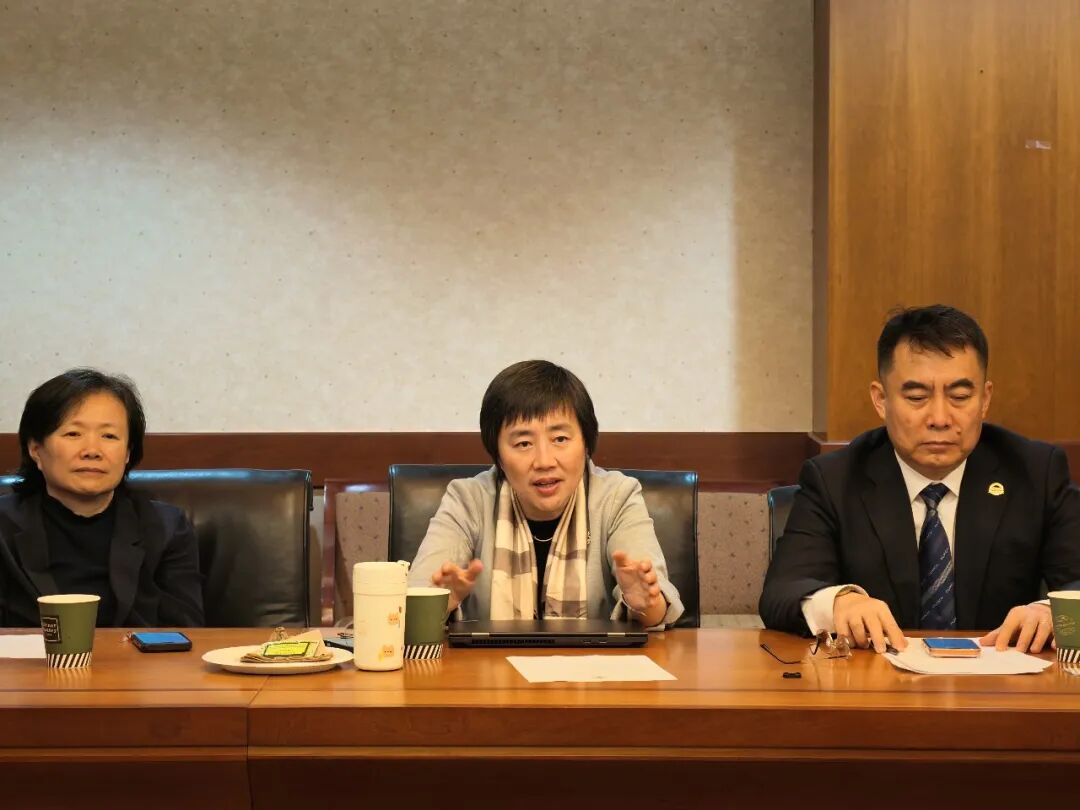
▲ Chen Limeng speaking during the discussion
Courage, Friendship, and Trust: The Keywords of a Century of Cooperation
At the China–U.S. Medical Dialogue, President Zhang Shuyang traced the story from PUMCH’s China–U.S. origins a century ago, to how — after the founding of the People’s Republic — “the people’s Union” devoted everything to the people, with generation after generation of PUMCH staff going wherever the motherland needed them most; and on to the new era, in which the hospital has signed three cooperation agreements in medical education with the CMB since its return to China. NAM President Monica Bertagnolli quoted Margaret Mead — “Never doubt that a small group of thoughtful, committed citizens can change the world” — and spoke highly of the CMB–PUMCH partnership as one that has influenced, and will continue to influence, the world. CMB President Professor Roger Glass said, “For more than a century, PUMCH has been regarded as China’s last hope for cure and recovery.” CMB Executive Vice President Barbara Stoll said, “Friendship builds trust, and trust makes practical, enduring cooperation possible.”
Professors from the University of Chicago and Johns Hopkins University School of Medicine looked back on their institutions’ cooperation with PUMCH. In the old photographs were Robert K. S. Lim (Lin Kesheng), Lin Qiaozhi, Zhang Xiaoqian, Wu Jieping, Zeng Xianjiu… alongside University of Chicago President Harry Pratt Judson and William Henry Welch, the founding dean of Johns Hopkins University School of Medicine. They traveled to China in turn to conduct investigations, wrote reports on the state of medicine in China, and thereby advanced the birth of the CMB and the founding of PUMCH. Welch recommended that PUMCH be modeled on Johns Hopkins, designing a small-scale, graduate-style medical education system that integrates clinical care, teaching, and research to cultivate medical leaders. To this day, the organs of PUMCH and the University of Chicago — two sister medical schools — still seem to sing to each other across the distance. The growth of generation after generation of medical masters has proven that the paradigm of elite medical education can transcend national borders.
Professor Charles Wiener of Johns Hopkins University School of Medicine pressed the question further: what would our founding predecessors do if they were here today? As people who truly believed in science, they would believe in exchange, in education, in training. As time grows ever more precious, we should think about how to move from time-based education to competency-centered education. In the age of AI, the relationship between simulation training and real patient experience, and how empathy can be integrated into assessment, are questions worthy of deep reflection. These offer direct inspiration for medical education at PUMCH.
Rare Disease Diagnosis and Treatment: The Most Natural Contemporary Proving Ground of the Century-Old PUMCH Spirit
Rare diseases — each with low incidence, difficult to diagnose, and marked by a scarcity of drugs and evidence — are a common global challenge. From being among the first in the world to recognize Kimura’s disease in earlier years, to being the first to name renal osteodystrophy, physicians trained in the PUMCH model have consistently demonstrated their strengths in the field of rare diseases. Today, PUMCH is home to a National Medical Center, a State Key Laboratory, and a major national science and technology infrastructure for translational medicine; it has established the Institute for Innovation and Development in Rare Disease Diagnosis and Treatment, and built a closed-loop national translational medicine platform running from bedside to laboratory and back to the clinic. A decade of dedicated work has produced an internationally leading data platform and a distinctively Chinese PUMCH model of rare disease diagnosis, treatment, and research.
At the rare disease symposium, PUMCH’s multidisciplinary rare disease team held in-depth dialogues with experts from three top hospitals across the United States. Professor Wendy Chung of Boston Children’s Hospital introduced rare disease platform projects including SPARK, Searchlight, GUARDIAN, and eMERGE, as well as gene therapy programs covering dozens of rare diseases — including individualized gene therapy strategies tailored to a single patient. Professor Peng Jin of Emory University presented the leading role of the Fragile X Research Center and its two-year genetic counselor training program. Professor Pedro Sanchez-Lara of Children’s Hospital of Philadelphia spoke from the perspective of a parent of a child patient, telling how to unlock rare diseases hand in hand with patient communities. During the open discussion, when asked about the challenges encountered in international cooperation, Wendy Chung said, “Our patients are critically ill and the window for treatment is limited; cooperation among doctors to save patients can overcome any barrier.” Her words moved me deeply. From diagnosis to treatment, from resources to the exploration of new mechanisms and the development of orphan drugs, we still have much to learn and much room to grow — but cooperation can cross barriers. This is precisely the conviction that the rare disease field most needs to hold fast to.
Friendship That Spans Time Is the Deepest Foundation of Cooperation
This year marks twenty years since I returned to China after completing my postdoctoral training at the NIH, and fifteen years since I went back to the NIH with support from the hospital’s Hundred Talents Program. During this stay in Washington, I had the privilege of meeting Professor Christopher S. Wilcox — a former collaborator of my mentor Jurgen Schnermann and the former longtime chief of the Division of Nephrology and Hypertension at Georgetown University Hospital. A graduate of the University of Oxford who went on to work at Harvard and Yale, he is still working full-time at the age of 80 and has received lifetime achievement awards from multiple American societies. As a clinician-scientist, his laboratory back then was the first top-tier physiology laboratory to bring together micropuncture and microperfusion technology platforms while simultaneously conducting clinical research. In recent years he has focused on clinical research; he has visited our department many times, and in 2024 we jointly compiled and published an English-language monograph. In our brief exchange, he proposed three clinical questions for possible collaboration — connecting heart failure, diuretics, peritoneal dialysis, and NCC function in the rare Gitelman syndrome — crossing the barriers between disciplines, between rare and common diseases, and in international cooperation. This embodies the shared will of Chinese and American medical peers to explore science: friendship and trust that span time, together with complementary resources, are precisely the foundation on which China and the United States can cooperate in medical education and clinical research going forward — working hand in hand, even as competitors.
On the journey home, it happened to be the Mid-Autumn Festival. As Professor Roger Glass put it in his closing words, quoting a classical Chinese verse — “The bright moon rises over the sea; though at the ends of the earth, we share this moment” — tracing back to the original aspiration with which PUMCH was built together a century ago. In the story of PUMCH, generation after generation of Chinese and American medical peers have written their marks together — and they will continue to write it into the future.
Author/ Chen Limeng
Editors / Dong Jingge, Chen Xiao
Editor-in-Chief / Duan Wenli
Executive Producer / Wu Peixin