On September 10, 2026, the fourth cohort of the Top 10 Achievements (2012–2025) funded by the Capital's Funds for Health Improvement and Research was officially announced. A pioneering project led by Chen Limeng, Director of the Department of Nephrology at Peking Union Medical College Hospital (PUMCH), titled "Establishment and Dissemination of Clinical Diagnostic, Therapeutic, and Quality-Control Strategies for Rare Tubulointerstitial Kidney Diseases," earned a spot among the Top 10. The project tackles the clinical bottlenecks of rare tubulointerstitial kidney diseases by using Gitelman syndrome (GS)—a rare tubulopathy—as an entry point to establish an end-to-end framework spanning diagnosis, subtyping, targeted therapy, long-term monitoring, and quality control.
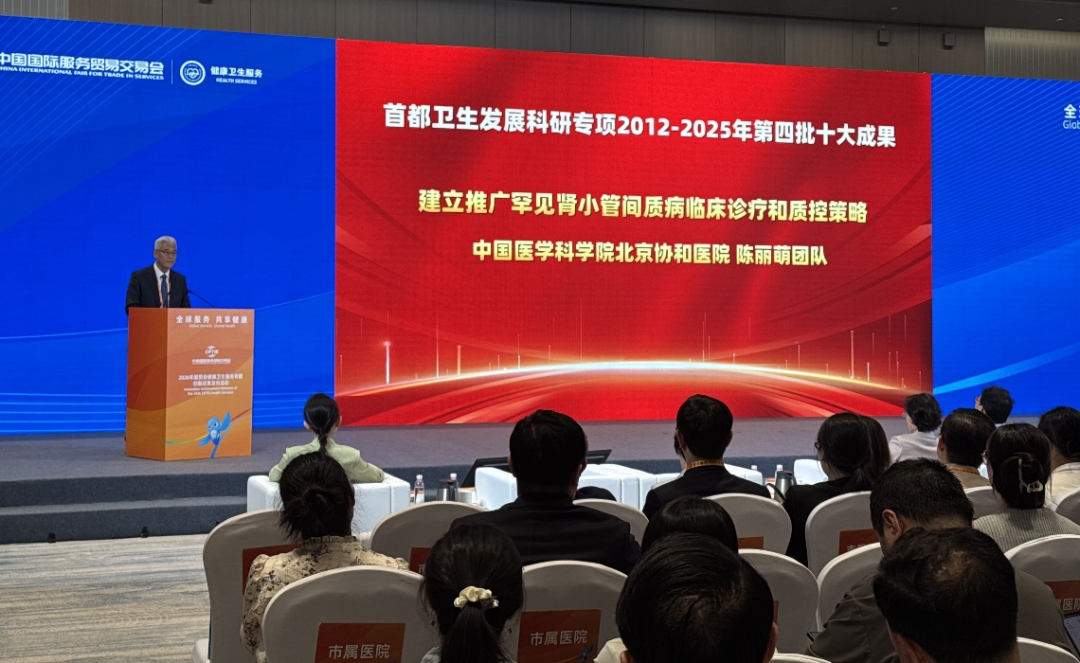
▲Top 10 Achievements Announcement Ceremony
Delayed and missed diagnoses represent the primary bottleneck for rare disease patients. In the case of GS—a rare inherited renal tubulopathy—patients typically suffer from severe hypokalemia and hypomagnesemia, which can trigger neuromuscular symptoms, cardiac arrhythmias, impaired consciousness, and life-threatening crises. Due to high misdiagnosis and underdiagnosis rates, patients often endure protracted medical odysseys from one hospital to another. Supported by the Capital's Funds for Health Improvement and Research, PUMCH's Department of Nephrology partnered with endocrinologists and other specialists to build the largest multicenter clinical cohort of GS in Asia. By developing standardized clinical pathways and pioneering an innovative modified physiological function test, the team elevated GS diagnostic sensitivity to 93% and specificity to 100%.
The team pioneered a novel clinical subtyping framework for GS and established a targeted therapeutic strategy based on the urinary biomarker prostaglandin E metabolite (PGEM). The efficacy of this precision approach was validated through clinical trials, and the findings have been cited by European and American clinical guidelines. In addition, the team developed AI-powered tools and a remote management app that rapidly identify suspected GS cases using routine biochemical tests, well-suited for primary care settings. Furthermore, they formulated comprehensive management strategies for long-term metabolic complications of GS, markedly improving patient outcomes and improving pregnancy safety.
To standardize clinical quality control, the team spearheaded the development of multiple Chinese expert consensus statements and clinical quality indicators, which were rolled out across member hospitals of the National Rare Disease Collaborative Network. In 2024, GS was officially included among China's top 10 single rare diseases prioritized for national quality control. Implemented in thousands of hospitals nationwide, this initiative has increased standardized diagnosis rates by 45% and reduced average inpatient costs by 9.1%, substantially elevating clinical care and improving prognosis for patients with rare tubulointerstitial kidney diseases.
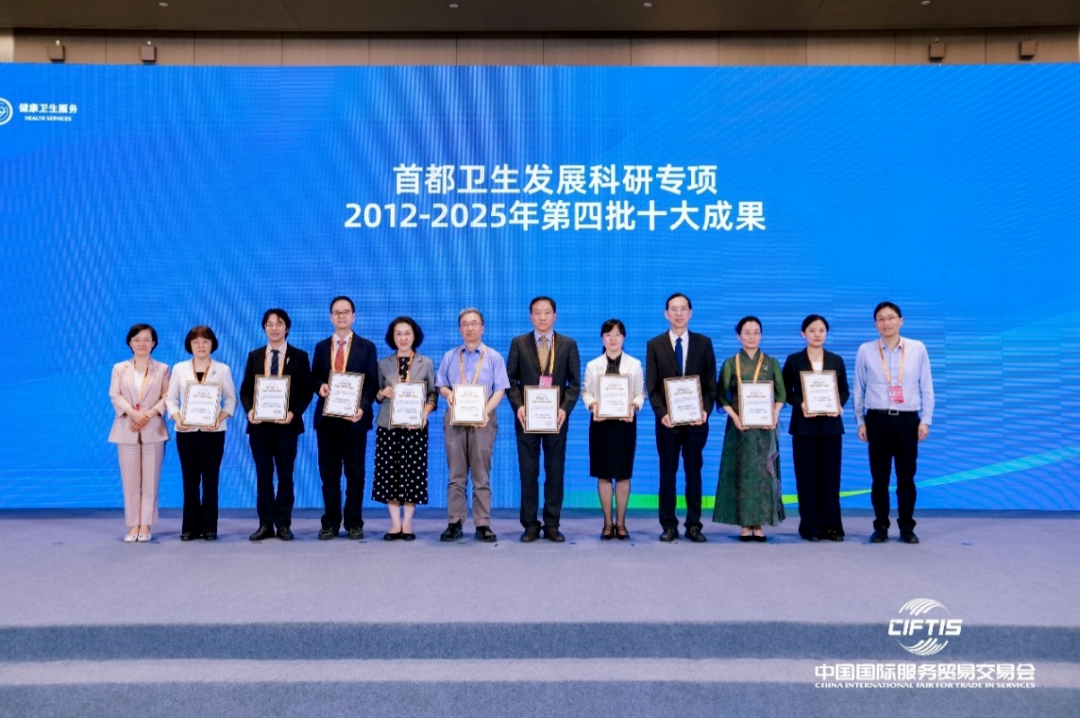
▲Group photo of the research teams of the Top 10 Achievements (Second from left: Researcher Nie Min from Director Chen Limeng's team)
According to Director Chen Limeng, the team will continue to leverage the National Rare Disease Collaborative Network and the platform provided by the Capital's Funds for Health Improvement and Research to expand clinical cohorts and deepen mechanistic investigations into rare tubulointerstitial diseases. Moving forward, the team aims to refine AI-assisted screening, remote management, and precision subtyping tools and accelerate the adoption of clinical quality indicators in primary care settings. In parallel, they will expand clinical trials to validate PGEM-guided and other targeted therapies, optimize management protocols for pregnancy, perinatal and long-term metabolic complications, and lead updates of expert consensus and clinical guidelines. These sustained efforts will empower early detection, timely diagnosis, and standardized care for more rare disease patients, advancing China's overall capacity for rare disease prevention and control.
Written and photographed by Ji Peili and Liu Yan
Edited by Dong Jingge
Chief editor Duan Wenli
Supervised by Wu Peixin