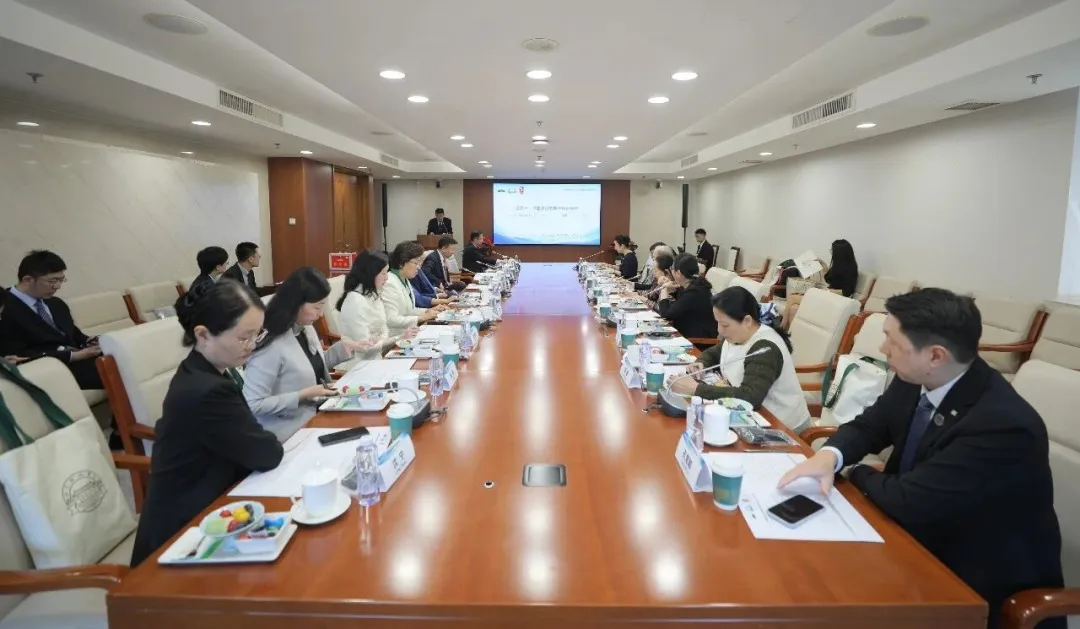
On September 12, 2026, the China Consortium of Elite Teaching Hospitals held its 2026 Council Meeting at the Academic Auditorium of Peking Union Medical College Hospital (PUMCH). The meeting reviewed the Consortium's milestones since 2023, approved amendments to its Charter, formally admitted the Second Affiliated Hospital of Zhejiang University School of Medicine, and set strategic priorities for its next phase of high-quality development. The meeting called on participating institutions to honor their core mission of nurturing top-tier medical talent for the nation, pooling collective strengths and pioneering reforms to shape China’s medical education landscape.
The meeting brought together leading medical educators and policymakers, including Lin Huiqing, President of the China Association of Higher Education; Chen Xinyu, Deputy Director General and Level I Bureau Rank Official (Director General-level), the Department of Health Science, Technology and Education at the National Health Commission (NHC); Barbara J. Stoll, Executive Vice President of the China Medical Board (CMB); John Lichten, Vice President and Chief Operating Officer of the CMB; and Wenkai Li, China Chief Representative of the CMB; PUMCH President Zhang Shuyang; Xiao Haipeng, President of the First Affiliated Hospital, Sun Yat-sen University; Lei Guanghua, President of Xiangya Hospital, Central South University; Cheng Yongzhong, Party Secretary of West China Hospital, Sichuan University; Zhao Weili, Vice President of Ruijin Hospital, Shanghai Jiao Tong University School of Medicine; Yang Li, Vice President of Peking University First Hospital; Zheng Min, Vice President of the First Affiliated Hospital, Zhejiang University School of Medicine; Shen Ning, Vice President of Peking University Third Hospital; Ivan Fan Ngai Hung, Associate Dean of Li Ka Shing Faculty of Medicine, the University of Hong Kong; and Yu Qing, Director of the Department of Education, Zhongshan Hospital, Fudan University. The meeting was moderated by PUMCH Vice President Du Bin.
Anchoring the Strategic Mission of Medical Education in a New Era
In her welcome address, President Zhang Shuyang noted that 2026 marks the start of China's 15th Five-Year Plan period. The State Council's National Health Plan for the 15th Five-Year Plan Period explicitly stipulates that by 2030, an integrated ecosystem dedicated to public health that links education, science and technology, and talent development will be largely in place. Emphasizing that medical talent is the strategic bedrock of the Healthy China initiative, she stressed that the Consortium, as a benchmark for Chinese teaching hospitals, must play a demonstrative and leading role on the path to that national goal. Reviewing the Consortium’s progress since its founding in 2015, President Zhang commended its commitment to nurturing talent for the nation and its fruitful efforts in integrating medical education with clinical practice and advancing competency-based medical education. Looking ahead, she outlined three strategic priorities: First, anchoring education in moral integrity to cultivate exceptional and compassionate clinicians; second, deepening clinical-educational synergy to distill best practices from leading teaching hospitals into scalable, actionable models, positioning the Consortium for high-quality development in the long run; and third, advancing global engagement by leveraging CMB as a vital bridge to institutionalize regular, high-level US-China medical education dialogues, contributing Chinese expertise to global health.
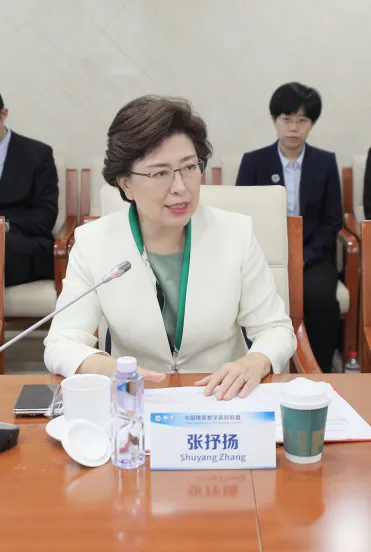
▲Welcome remarks by PUMCH President Zhang Shuyang
Charting the Future Course Through Strategic Deliberation
During the deliberation session, council members engaged in extensive discussions on the Consortium’s achievements and prospective applications, institutional mechanisms for high-quality growth, standardized framework development, future-oriented education reforms, and upcoming action plans.
Council members reached broad consensus on several strategic imperatives:
Strengthening internal governance by exploring rotating leadership models and securing dedicated resource commitments; Establishing an expert committee to advise government bodies—particularly on Graduate Medical Education (GME)—and spearhead the development of standards, guidelines, and consensus; Promoting cross-institutional rotations and resource sharing and disseminating best practices to primary-level healthcare facilities through specialty alliances; Harnessing digital intelligence to empower medical training, leveraging Consortium Clinical Education Fellows as catalysts to strengthen interdisciplinary mentorship for young physicians; Championing the spirit of medical educators to revitalize clinical teaching and drive consistent quality in Chinese medical education.
Deepening US-China Collaboration to Address Global Health Challenges
In her address, CMB Executive Vice President Barbara J. Stoll highly commended the Consortium's accomplishments. She observed that despite differences in population size, China and the United States share common challenges, including population aging, clinical workforce shortages, and rural-urban healthcare disparities. Reaffirming the CMB’s dedicated support for bilateral medical exchanges, she stated that the CMB will relaunch the US-China medical exchange program, bringing American medical students and young physicians to China to experience the country firsthand, build lasting friendships in medicine, foster mutual trust through those friendships, and forge enduring partnerships rooted in that trust.

▲Address by Barbara J. Stoll, Executive Vice President of the CMB
Deputy Director General Chen Xinyu affirmed the Consortium as the leading force in China’s medical education. Next steps should involve enlisting the Consortium's expertise into dedicated task forces, turning its competency frameworks, faculty training initiatives and other deliverables into national standards, policies and actions. She added that efforts will be accelerated to incorporate medical education investment and training quality into official evaluation and monitoring indicators for teaching hospitals, providing robust institutional backing for the Consortium.
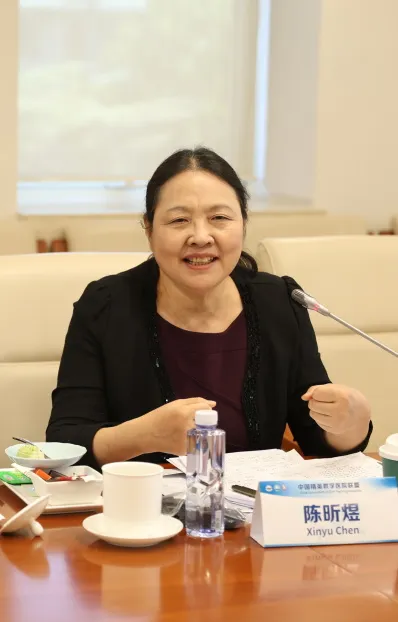
▲Address by Deputy Director General Chen Xinyu
In 2015, PUMCH led the establishment of the China Consortium of Elite Teaching Hospitals, with the support of the NHC, the Chinese Medical Doctor Association, and the CMB. With the addition of the Second Affiliated Hospital of Zhejiang University School of Medicine, the Consortium's membership has expanded to 11 institutions. Over the past decade, the Consortium has achieved fruitful outcomes in aligning medical education with healthcare and advancing competency-based medical education, serving as an important force leading the reform and development of medical education in China.
Written by Li Ziquan
Photographed by Sun Liang and Liu Hongrui
Edited by Wang Jingxia and Chen Xiao
Chief editor Duan Wenli
Supervised by Wu Peixin