On August 19, 2026, Zhang Tao, Deputy Director of the Department of Dentistry at Peking Union Medical College Hospital (PUMCH), led his team in successfully performing a "single-port robotic-assisted extended resection of base of tongue tumor, cervical lymph node dissection, and submental island flap transfer and reconstruction" on a 60-year-old female patient with mucoepidermoid carcinoma of the base of the tongue. This marked the team's 20th case since introducing the single-port robotic system in April of this year, making them the highest-volume center nationwide for single-port robotic surgery in oral, maxillofacial, and head-and-neck surgery.
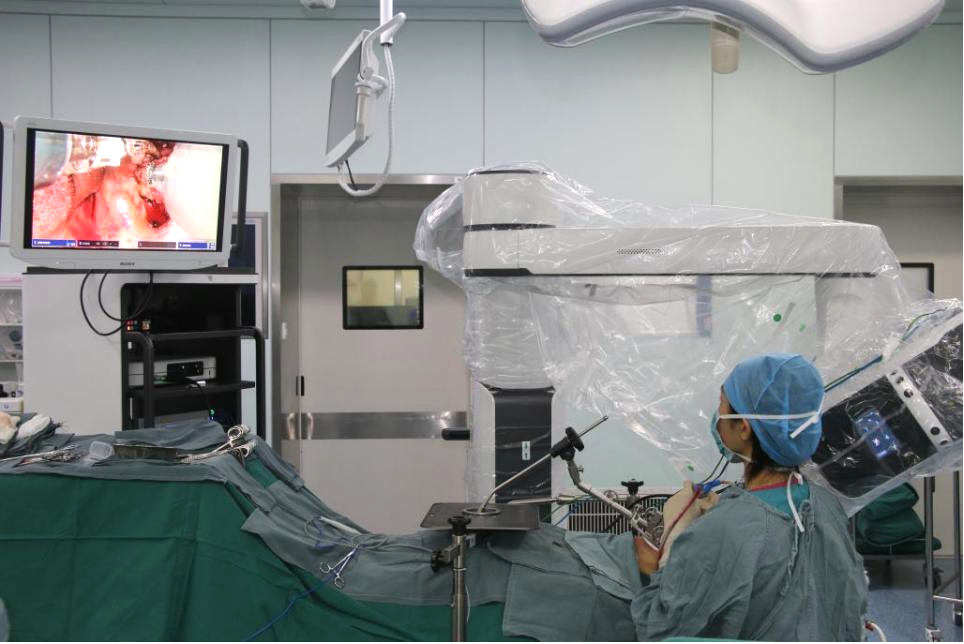
▲The 20th single-port robotic surgery case
The patient presented with odynophagia. Upon examination, the tumor was found deeply embedded at the base of tongue, adjacent to critical nerves, blood vessels, and pharyngeal muscles. Conventional surgical approaches would have required wide exposure of the operative field, necessitating division of the lower lip and mandible—compromising the patient's normal function and quality of life. After thorough evaluation, the team opted for single-port robotic-assisted surgery. The single-port robotic system integrates an endoscope and multiple robotic arms through a single channel, making it ideal for access to confined anatomical spaces transorally or via inconspicuous small incisions. Its three-dimensional, high-definition magnified visualization allows precise identification of deep intricate structures, while the serpentine articulated arms enable delicate maneuvers—dissection, incision, hemostasis, and suturing—within limited working space. This approach achieved precise tumor resection and concurrent reconstruction while avoiding facial incisions. The procedure proceeded smoothly, and the patient had excellent postoperative recovery, with speech and swallowing functions well-preserved.
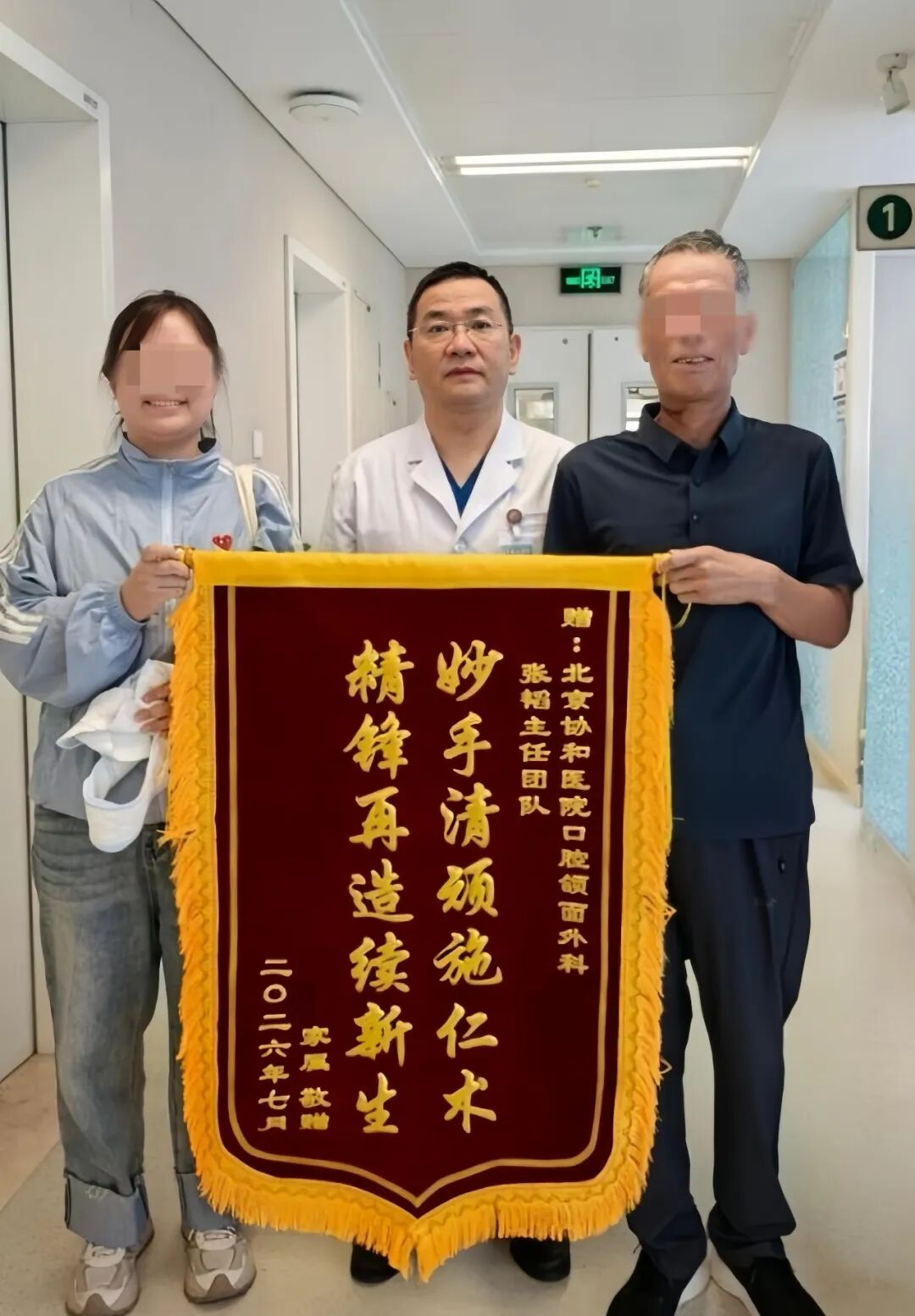
▲Patient recovered well post-operatively (left), photographed with Deputy Director Zhang Tao
Deputy Director Zhang Tao's team began exploring robotic surgery in 2023. In November that year, they performed China's first transoral oropharyngeal tumor resection using a domestically-developed robotic system, following which they have cumulatively performed over 40 multi-arm robotic surgeries. Since introducing the single-port robotic system in April this year, their indications have progressively expanded to include oropharyngeal, oral cavity, parotid, submandibular gland tumor resection, and flap harvesting across multiple subspecialties. Among the 20 single-port cases completed, 12 involved concurrent flap reconstruction including buccinator myomucosal flaps, submental island flaps, forearm flaps, and anterolateral thigh flaps, which covered post-operative defects and protected critical structures, facilitating restoration of swallowing and speech function. These composite procedures, combining robotic minimally invasive resection with concurrent defect repair and reconstruction, represent an advanced yet technically demanding approach in oropharyngeal tumor management.
The established clinical adoption of single-port robotic techniques has significantly advanced the department's preoperative surgical planning, operative standardization, and perioperative rehabilitation protocols. Its mature clinical application further solidifies PUMCH's position as a national medical center leading the comprehensive treatment of complex head-and-neck malignancies.
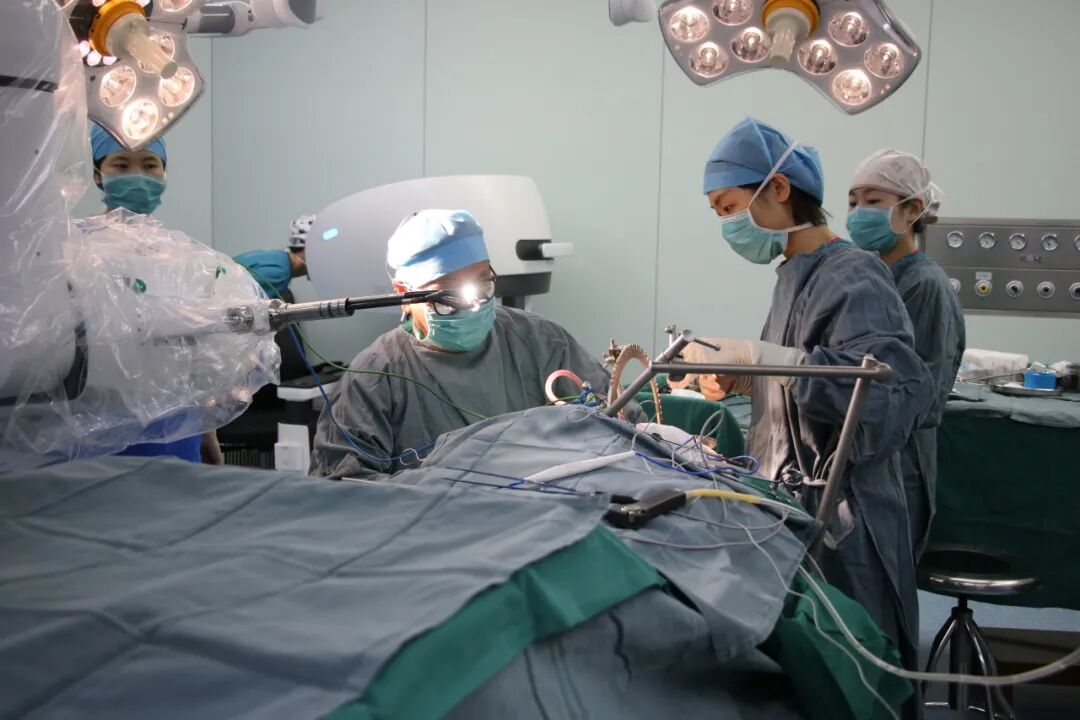
▲Deputy Director Zhang Tao performing a single-port robotic surgery
Deputy Director Zhang Tao stated: "Single-port robotic surgery is a powerful new tool for minimally invasive precision surgery, offering patients expanded treatment options." Moving forward, PUMCH's Department of Dentistry will continue to advance surgical innovation and multicenter clinical research and standardized training, extending the benefits of technology progress to more patients.
Written by and photographed by Li Jiaxi
Reviewed by Wan Kuo
Edited by Dong Jingge
Chief editor Duan Wenli
Supervised by Wu Peixin