The 2026 Government Work Report placed the health-first development strategy in a prominent position and identified biomedicine as an “emerging pillar industry.” On April 15, the founding ceremony of the Institute for Advanced Biomedical Technologies, IABT of Peking Union Medical College Hospital was held. The establishment of IABT marks an important step by PUMCH to implement the national innovation-driven development strategy and contribute to the building of a Healthy China. It will develop a full-chain innovation system spanning basic research, technology research and development, clinical validation, and industrial translation, adding new momentum to the development of new quality productive forces in healthcare.

▲ Founding ceremony of IABT. From left: Researcher Wang Wei of the Institute of Laboratory Animal Sciences, Chinese Academy of Medical Sciences; Wu Peixin, Party Secretary of PUMCH; Shen Jianzhong, Deputy Director of the China National Center for Biotechnology Development; Academician Ji Xunming, President of the Chinese Academy of Medical Sciences and Peking Union Medical College; Wang Hongwei, Vice President of Tsinghua University; Zhang Shuyang, President of PUMCH; and Li Haitao, Dean of the School of Basic Medical Sciences, Tsinghua University.
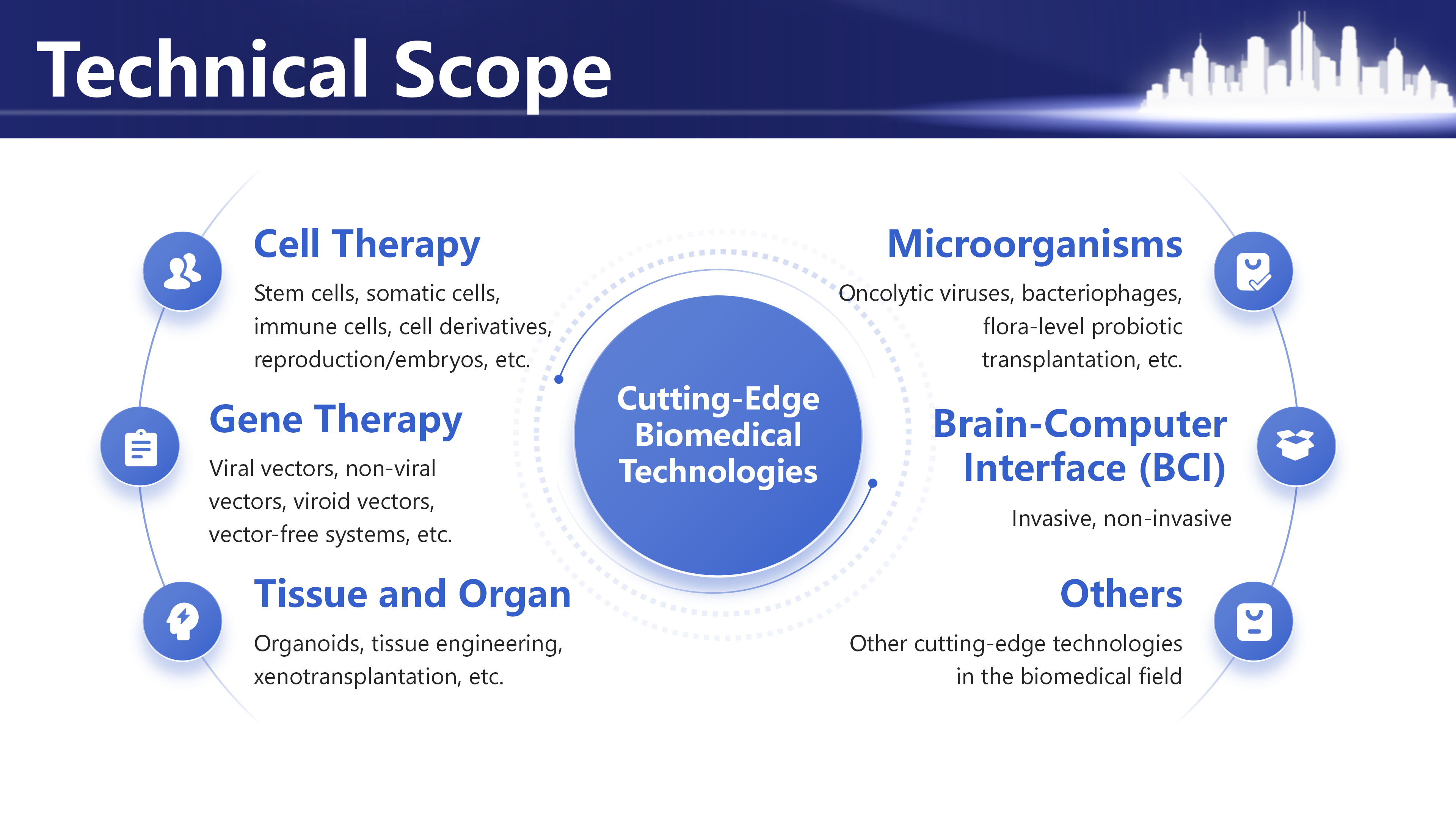
Building on PUMCH’s rich clinical resources, integrating Tsinghua University’s cutting-edge strengths in medical-engineering integration, artificial intelligence, life sciences, and medicine, and bringing together the top-tier medical education and core basic medical capabilities of the Chinese Academy of Medical Sciences and Peking Union Medical College, IABT will actively explore frontier biomedical technologies in areas such as cell therapy, gene therapy, tissue and organ technologies, microbiome research, and brain-computer interfaces. It aims to become a domestically leading and internationally first-class clinical research and translational innovation platform for new biomedical technologies, integrating original research, technology incubation, clinical validation, achievement translation, policy think-tank functions, and talent development.
Deputy Director Shen Jianzhong noted that building a full-chain innovation system from basic research to clinical application requires strict adherence to the bottom line of safety. He expressed his hope that IABT will focus on clinical needs, leverage PUMCH’s strengths, develop verifiable and translatable research pathways, uphold rigorous quality management, accelerate the delivery of research achievements to patients, and make greater contributions to safeguarding people’s health and promoting the high-quality development of biomedical science and technology.
Party Secretary Wu Peixin pointed out that the promulgation of the Regulations on the Management of Clinical Research and Clinical Translational Application of New Biomedical Technologies provides solid policy support for thoroughly implementing the national strategy for medical innovation and development, and for accelerating the research and development of new biomedical technologies as well as their standardized clinical translation and application in China. The strong alliance among the three parties in jointly building the IABT platform will effectively promote the development of a full-process innovation network for advanced biomedical technologies.
President Zhang Shuyang put forward three expectations for the development of IABT. First, IABT should uphold original innovation, tackle key core technologies, and produce achievements with international influence. Second, it should pursue full-chain translation, strictly follow the provisions of the Regulations, standardize ethical review and clinical practice, and ensure that technologies benefit patients. Third, it should remain open and collaborative, deepen multi-party cooperation, build an innovation consortium, and foster an integrated ecosystem linking industry, academia, research, application, and medicine.
General Secretary Xi Jinping has emphasized that the key to building a great modern socialist country lies in achieving self-reliance and strength in science and technology. The establishment of IABT is a powerful testament to driving the development of new quality productive forces through scientific and technological innovation. Standing at the outset of the 15th Five-Year Plan period, IABT will contribute solid “PUMCH strength” to safeguarding people’s lives and health and building a Healthy China.
Du Bin, Vice President of IABT; Li Haitao, Dean of the School of Basic Medical Sciences, Tsinghua University; and Wang Wei, Vice President of IABT and Researcher at the Institute of Laboratory Animal Sciences, Chinese Academy of Medical Sciences, attended the ceremony. Also present were heads of clinical and medical technology departments and research platforms, chief representatives of major projects, representatives from the National Key Laboratory for Difficult, Severe and Rare Diseases, and representatives of young researchers.

Written by Chen Jiao and Li Jiayue
Photos by Sun Liang
Edited by Gan Dingzhu and Chen Jiao
Chief Editor: Duan Wenli
Supervised by Wu Peixin
Attachment: Chinese and English versions of the Regulations on the Management of Clinical Research and Clinical Translational Application of New Biomedical Technologies (Order No. 818 of the State Council).