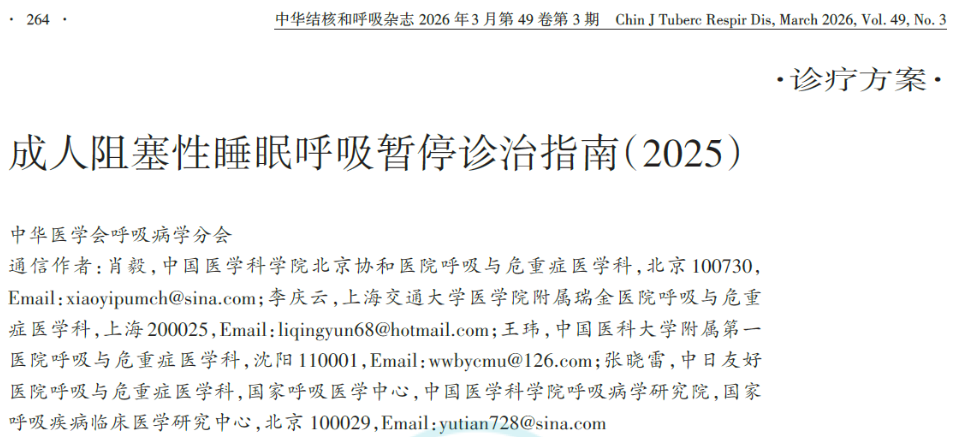
On March 14, 2026, the Clinical Guidelines for the Diagnosis and Treatment of Obstructive Sleep Apnea in Adults (2025) was released in Beijing. The updated guidelines align with international scientific advances and incorporate high-quality research from Chinese scholars. They introduce five major updates in diagnostic standards, severity assessment, and other key areas, guiding standardized practices in OSA diagnosis and treatment.
Obstructive sleep apnea (OSA) is a common sleep-related breathing disorder characterized by repeated breathing pauses during sleep. Without timely, appropriate treatment, OSA can lead to long-term complications including hypertension, coronary artery disease, arrhythmias, cerebrovascular disease, diabetes, and cognitive impairment. It significantly compromises patients’ ability to work and learn and even increases risks of accidents such as road traffic injuries. An estimated 176 million people in China currently have OSA.
Dr. Xiao Yi, Chief Physician of the Department of Respiratory and Critical Care Medicine at PUMCH and corresponding author of the guidelines, highlights several major breakthroughs. The new guidelines introduce composite metrics including hypoxic burden and sleep breathing impairment index. Rather than merely counting breathing events, the guidelines now comprehensively assess the pathophysiologic burden, evaluating both the accumulated nocturnal hypoxemia and the overall systemic impact of breathing events on the body. The guidelines establish a precision classification system combining clinical phenotyping and pathophysiologic phenotyping, enabling individualized care. This represents a major advance in OSA management from limited pharmacologic options to targeted medical therapies. Telemedicine and home monitoring technologies are now integrated into a structured follow-up framework, providing patients with precision, individualized evidence-based clinical management.

March 21 marks World Sleep Day. As a pioneer in China's sleep respiratory medicine field, Professor Huang Xizhen from PUMCH's Department of Respiratory and Critical Care Medicine established China's first sleep-disordered breathing center, laying a solid foundation for subspecialty development. Coinciding with the guidelines release, the "OSA Individualized Diagnosis and Treatment Collaborative Group," led by PUMCH, has officially launched.
Dr. Xiao Yi outlines three key strategies to implement the guidelines: first, conducting high-quality domestic clinical research to provide robust, population-specific evidence for guideline updates; second, leveraging artificial intelligence, wearable devices, and telemedicine to enhance OSA screening, diagnosis, and full-cycle management efficiency; third, deepening multidisciplinary collaboration across respiratory, cardiovascular, neurology, and endocrinology departments, and strengthening standardized training for primary care physicians to promote the equitable development of OSA diagnostic and treatment capabilities across all regions.
Written by the Department of Respiratory and Critical Care Medicine and the Publicity Department
Pictures courtesy of the Department of Respiratory and Critical Care Medicine
Edited by Gan Dingzhu, Hong Chengwei, and Chen Xiao
Chief Editor Duan Wenli
Supervised by Wu Peixin