
Recently, at the Consultation Center for Complex and Rare Diseases at PUMCH, a 14-year-old teenager Zhou (pseudonym) found new hope. For eight years, he has struggled with recurrent eyelid edema, submandibular gland enlargement, and cervical lymphadenopathy caused by Kimura disease, a rare condition affecting approximately one in one hundred thousand people. Zhou’s family has long hoped for a more targeted and lasting therapeutic solution. When his previous anti-IL-5 monoclonal antibody therapy proved ineffective, a multidisciplinary team at PUMCH proposed a personalized combination strategy incorporating immunosuppressive agents to better balance disease control with quality of life. This clinical decision reflects nearly a century of institutional experience and expertise that PUMCH has accumulated in the study and treatment of Kimura disease.
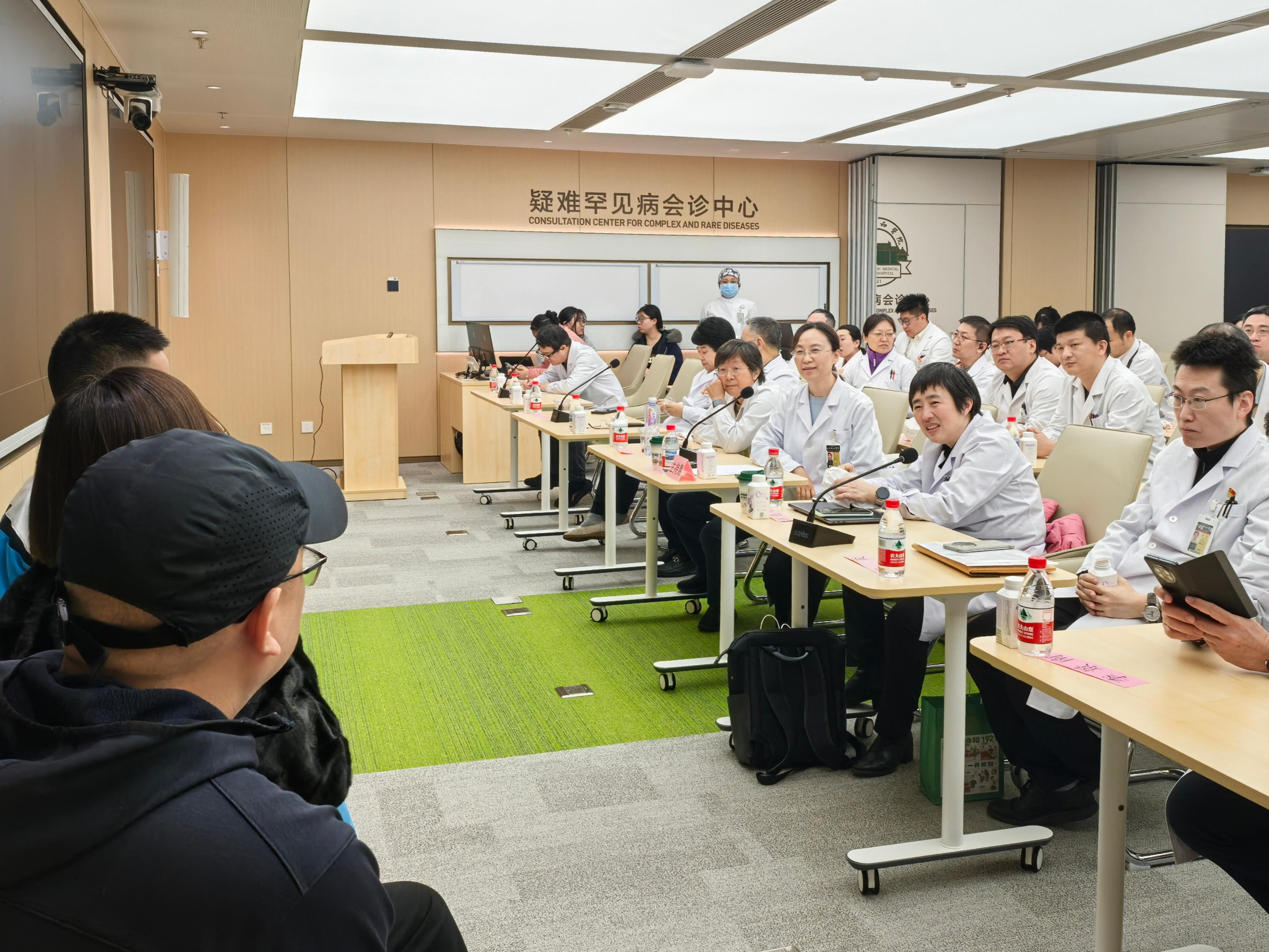
▲The consultation in session
In 1937, Dr. Jin Xianzhai and Dr. Situ Zhan from the Department of Oncology at PUMCH reported seven unusual cases at the annual meeting of the Chinese Medical Association. These patients presented with painless head and neck masses accompanied by markedly elevated peripheral blood eosinophils. The physicians named the condition "eosinophilic hyperplastic lymphogranuloma" and published their findings in the Chinese Medical Journal, eleven years before Japanese scholar Kimura's systematic description in 1948. This earlier identification contributed to the global awareness of what would later become known as Kimura disease.
Building on this accumulated experience, PUMCH was among the first to apply a multidisciplinary team (MDT) to the diagnosis and treatment of Kimura disease. Specialists from rheumatology, nephrology, hematology, general internal medicine, allergy, otolaryngology, pathology, and radiology formed a comprehensive network of care. In Zhou's case, the multidisciplinary team not only confirmed the diagnosis but also investigated the potential association between eosinophilic elevation and his mild cardiac valve insufficiency, exemplifying the holistic perspective of modern medicine.
The evolution of Kimura disease management at PUMCH—from the initial microscopic identification to precision decision-making through multidisciplinary collaboration; from corticosteroid monotherapy to multi-targeted intervention combining immunosuppressants and targeted agents—speaks volumes about the cumulative wisdom of generations of clinicians and researchers at PUMCH. The institution remains committed to leveraging its multidisciplinary consultation platform for rare diseases to develop individualized stratified treatment strategies that will ultimately benefit more patients.