In the vast landscape of medicine, rare diseases have long occupied a forgotten corner. Of the more than 10,000 known rare diseases worldwide, 80% have genetic origins, 50% begin in childhood, and fewer than 5% have effective treatments. China's rare disease population exceeds 60 million—patients caught in a triple bind of diagnostic challenges, limited treatments, and medication inaccessibility, leaving countless families struggling in helpless and prolonged uncertainty.
"In building a Healthy China, we leave no one behind." This commitment has guided Dr. Zhang Shuyang, President of Peking Union Medical College Hospital (PUMCH), throughout her work in rare diseases. Under her leadership, the team, with remarkable determination and perseverance, has built a comprehensive system spanning diagnosis, treatment, research, and medical support. This is a pioneering "Chinese approach" that has achieved a historic transformation in China's rare disease care—from following to keeping pace with global standards and now even leading in select areas. The team recently received the 2024 Beijing Scientific and Technological Progress Award (First Prize) for "Establishment and Application of a Rare Disease Diagnosis, Treatment and Research System". This recognition honors not just medical innovation, but a commitment to many patients who had been underserved.

From Void to Network: Building a National System
"Doctors who can treat rare diseases are rarer than the diseases themselves"—this familiar industry quip reflected China's long-standing gap in rare disease care.
At the outset of this challenging endeavor, Zhang recognized that rare diseases are not isolated medical problems but systematic challenges concerning people's livelihoods, requiring a sustainable institutional framework at the national level to truly break through.
Definition establishes policy foundations. The team propelled China's catalog-based approach to defining rare diseases, filling a long-standing policy void. The first National Rare Disease Catalog was published in May 2018 with 121 diseases; by September 2023, it expanded to 207, providing solid legal and policy basis for clinical guidelines, drug development, and insurance coverage. Rare disease care became part of China's national health agenda.
Innovation creates the "PUMCH Model". Dr. Zhang's team successively established China's first national-level rare disease multidisciplinary team (MDT), a joint clinic, a medical department, and specialized wards for rare diseases. Tapping into 400+ experts across 40+ specialties, they built an integrated "clinic-ward-research and translation" system. The Thursday afternoon MDT sessions became a standing commitment, serving 318 complex cases over six years. The model evolved from a high-touch approach where multiple experts served individual patients, to an efficient system where expert teams serve multiple patients simultaneously—achieving a significant leap in care delivery efficiency.

▲On February 28, 2019, PUMCH established China's first national-level rare disease consultation platform—the PUMCH Rare Disease Multidisciplinary Team (MDT). Over the past six years, the rare disease MDT has served 318 patients.
National reach through a dense collaborative network. Through the National Rare Disease Collaborative Network, the PUMCH model expanded to 624 Tertiary Grade A hospitals across 31 provinces (autonomous regions and municipalities). The tremendous impact is measurable: average diagnosis time plummeted from 4 years to 4 weeks, medical costs dropped by 90%, the team helped 361 general hospitals launch rare disease services, patient volumes grew by 16.4% annually, MDT utilization jumped from 25% to 68%, and medication access improved from 27.2% to 41.1%. Quality care is reaching patients regardless of their location.
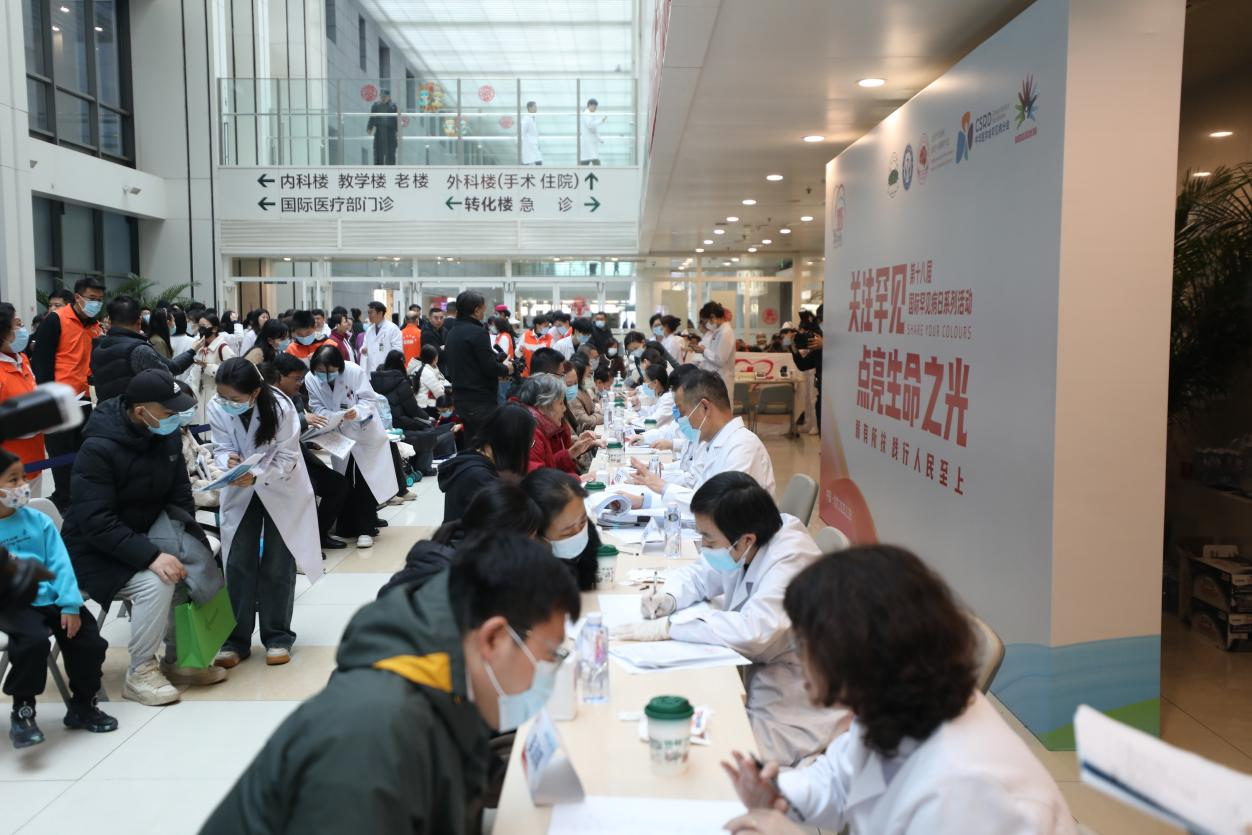
▲On February 28, 2025, marking the 18th International Rare Disease Day, PUMCH held a free clinic event.
Research Breakthroughs Powered by AI and Genetic Decoding
PUMCH physicians have always pursued a clear mission: identify pressing clinical problems and conduct meaningful, high-quality research. Confronting the formidable barrier of rare disease diagnosis, Zhang led her team to forge new pathways using cutting-edge technology.
AI diagnostic tools. PhenoBrain, China's first AI-assisted diagnostic system, screens phenotypes for over 9,000 rare diseases. This year's launch of the "PUMCH-Genesis" AI large model—built on PUMCH's quality database of rare disease cases, expert decision-making, multidisciplinary inference and reasoning, and extensive rare disease research and training data in China. This model improves diagnostic efficiency, reduces time to diagnosis, and tackles the persistent problem of variable care quality in rare disease treatment.

Pathogenic discoveries: cracking the genetic code. The team's work extends far beyond diagnostic tools—they have pursued the fundamental mechanisms of rare diseases. Through large-scale genetic screening and in-depth investigation, they have discovered 35 novel pathogenic genes and elucidated their mechanisms. These breakthrough findings, emerging from rigorous laboratory research, let patients see greater hope and see hope earlier.
Safeguarding Lives: From "No Treatment" to "Affordable Treatment"
Accurate diagnosis is only the first step in a long journey—the real hope lies in ensuring patients have effective treatments they can actually access and afford. Acting as trailblazers in rare disease therapeutics and medication access, Dr. Zhang's team has persistently fought to dismantle barriers, creating a vital lifeline for patients once left without options.
Changing outcomes for fatal diseases. Transthyretin amyloid cardiomyopathy (ATTR-CM) was historically fatal within 2-5 years, with invasive biopsy yielding diagnoses in under 20% of cases. The team developed a highly sensitive 99Tcm-PYP myocardial radionuclide imaging method that raised diagnostic accuracy to 80%. The team also led multicenter trials nationwide for targeted drug Tafamidis, facilitating its approval and insurance coverage—reducing inpatient mortality by 30%. What’s more exciting is that the team is now conducting China's first gene editing drug trial (YOLT-201), a potentially curative approach that stands as a true milestone for the country.
Bridging the last-mile gaps in medication access. As a proving ground for rare disease medication policy, the team has achieved multiple firsts: issuing on January 9, 2025 the first domestic prescription at PUMCH for mitotane, a drug for treating adrenocortical tumors, within 48 hours of approval in China; first prescription in China for clobazam for refractory epilepsy (2022); life-saving access to deflazacort for a child with Duchenne muscular dystrophy (2024); and compassionate use programs for paroxysmal nocturnal hemoglobinuria, helping patients in dire need. The team facilitated marketing approval of 134 rare disease medications, with over 80 now covered by national medical insurance at average price reductions exceeding 50%, directly saving RMB 492 million in healthcare costs. More and more life-saving drugs, once considered prohibitively expensive, are becoming accessible to ordinary families.
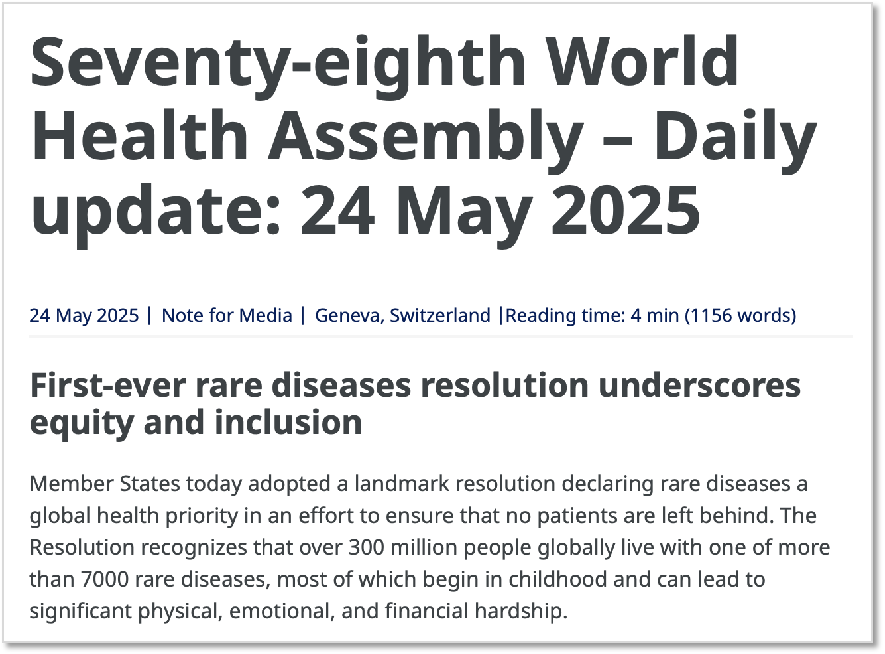
In May 2025, the 78th World Health Assembly adopted the first-ever resolution on rare diseases—a milestone championed by Dr. Zhang representing China and developed collaboratively with experts from multiple countries. This resolution formally established rare diseases as a global health priority. "Rare diseases are a litmus test for global health equity", Dr. Zhang emphasized. "They touch on fundamental questions of justice, innovation, and our collective responsibility to provide global public goods." Ensuring health rights for rare disease patients, she noted, directly reflects how societies embody fairness and justice in healthcare.
"Sustainable progress in any undertaking hinges on nurturing talent and perpetuating knowledge", affirms Dr. Zhang. Deeply aware that advancing rare disease care is a long-term endeavor, she champions the establishment of an indigenous knowledge framework and professional workforce to keep the beacon of hope shining for generations to come.
Establishing "Chinese standards" in knowledge. The team published 32 rare disease guidelines and monographs, launched China's first journal for rare diseases as a discipline (Journal of Rare Diseases), developed the first textbook, and launched graduate and continuing education programs. Most significantly, they led development of the first national-level Rare Disease Diagnosis and Treatment Guidelines, published by the National Health Commission, which became the authoritative reference for healthcare professionals nationwide, providing the foundation for standardized rare disease care across China.
Cultivating professional expertise. The team spearheaded the nationwide UPWARDS training initiative for rare diseases, registering 1.51 million attendances among healthcare professionals across the country. PUMCH's MDT sessions, available to all member institutions in the National Rare Disease Collaborative Network, demonstrate remarkable reach: in 2024 alone, 549 hospitals participated in livestreamed sessions with cumulative views of 125,000—averaging over 100 hospitals and 2,000 participants per session. These trained "seed physicians" now practice throughout China, creating a multiplier effect in expertise dissemination. These educational contributions earned the team honors such as the National Teaching Achievement Award (First Prize) and designation as a National Huang Danian-style Teacher Team.
Building world-class research infrastructure. The National Rare Disease Registry System (NRDRS) developed by the team has registered 193 disease cohorts, encompassing a multi-ethnic, multi-disease database of over 90,000 cases and nearly one million biological specimens. This platform has supported 105 clinical trials and enabled publication of 456 academic papers. Today, NRDRS stands among the world's top three rare disease data systems, alongside the US NORD and European Orphanet, giving China substantial influence in international rare disease research. As a member of the RDI (Rare Disease International) - Lancet Commission on Rare Diseases, Dr. Zhang published commentary in The Lancet advocating for an International Rare Disease Alliance through the Belt and Road Initiative, extending benefits of the Chinese approach to patients worldwide.
The transformation has been profound. Doctors capable of treating rare diseases were once "rarer than the diseases themselves", and that was no longer the case. Diagnosis that previously took up to 4 years now takes just 4 weeks. Patients who lacked treatment options now find medications both available and affordable. China now has its first State Key Laboratory of Complex, Severe and Rare Diseases and has deployed the nation's first rare disease AI model in clinical practice. Yet the team's impact transcends these metrics. They have built systems connecting underserved patients to comprehensive care, harnessed technology to break through diagnostic and therapeutic barriers, and developed educational programs that ensure knowledge and know-how pass to future generations.


Written by Chen Xiao and Zhang Shuyuan